Master the Basics of Amazon FBA (Fulfillment by Amazon) and Turn Your Knowledge into Sales
Have you ever considered the sheer scale of opportunities hidden within the world of Amazon FBA? Beyond every click, purchase, and product lies a complex and fascinating world, ready to be explored and conquered. Amazon FBA goes beyond being just an e-commerce platform; it is an ecosys

Have you ever considered the sheer scale of opportunities hidden within the world of Amazon FBA? Beyond every click, purchase, and product lies a complex and fascinating world, ready to be explored and conquered.
Amazon FBA goes beyond being just an e-commerce platform; it is a complete ecosystem, full of possibilities and innovative strategies. Every element of this universe plays a vital role in the success of your business. Imagine being able to navigate this space with confidence, deeply understanding how it works, using the right tools to uncover opportunities, and applying effective strategies to maximize your income.
Mastering the basics of Amazon FBA not only opens doors to new possibilities, but also equips you to run your business with extraordinary efficiency and effectiveness. Get ready to embark on a journey of learning and discovery. By immersing yourself in this world, embracing its methods, and applying its strategies, you will move ever closer to success in one of the most dynamic and competitive markets in the world.
Main terms for buying and selling on Amazon FBA
Amazon FBA (Fulfillment by Amazon)
Amazon FBA is a storage and distribution service offered by Amazon that allows sellers to send their products to Amazon warehouses. Once a customer places an order for an FBA product, Amazon handles the picking, packing, shipping, customer service, and returns related to that order.
This service gives sellers the advantage of Amazon’s fast delivery, including options such as Prime, and reduces the logistics and customer service burden for the seller. In addition, FBA products often enjoy greater visibility and trust on the Amazon platform.
Amazon FBM (Fulfillment by Merchant)
Amazon FBM is a selling model on Amazon in which the seller is responsible for storing, packing, and shipping products directly to customers, instead of using Amazon’s storage and distribution services (FBA). In this model, the seller is also responsible for customer service and returns associated with their orders.
FBM is a preferred option for sellers who want more direct control over their inventory and logistics, or for those whose products do not fit Amazon FBA’s size or category restrictions. However, it may require more time and resources to manage logistics and customer service compared with FBA.
FBM products do not automatically benefit from Amazon Prime shipping, which can influence a customer’s purchase decision.
A9 Algorithm: The A9 Algorithm is Amazon’s advanced search system, designed to handle and process the billions of search queries made monthly on the platform. The algorithm plays a crucial role for both buyers and sellers: it helps customers locate the product they are looking for efficiently and accurately, while simultaneously enabling sellers to increase the visibility and sales of their products.
A9 uses a series of factors, such as keyword relevance, sales history, reviews, and product availability, to determine product rankings in search results, thereby ensuring an optimal shopping experience for users and fair opportunities for sellers.
Auto-responder: The auto-responder is an automated communication tool linked to a seller’s Amazon store. Its main function is to send a series of scheduled emails to customers after a purchase or in response to certain actions or events. These can include thank-you messages, order confirmations, shipping updates, requests for reviews or feedback, and offers of post-sale support.
Using an auto-responder helps improve the customer experience by providing timely and relevant information, while also encouraging customer interaction and loyalty.

BSR (Best Seller Rank): Best Seller Rank, or BSR, is a crucial indicator on Amazon generated by its algorithm, which ranks products according to their sales level within their respective categories. A product with a BSR of #1, for example, is the best-selling item in its category. The ranking is dynamic and changes constantly, reflecting recent sales and buying trends.
A low BSR indicates high popularity and frequent sales, which is valuable information for sellers looking to optimize their inventory and marketing strategies, as well as for buyers interested in the most popular products.
Buy Box: The Buy Box is a fundamental component of Amazon product listing pages, usually located in the upper-right corner. This box, highlighted in yellow or orange, contains the “Add to Cart” and “Buy Now” buttons, making it easy for customers to make quick and direct purchases.
For sellers, especially when multiple merchants offer the same product, “winning” the Buy Box becomes a key strategic goal, since most sales are made through this option.
Amazon’s algorithm assigns the Buy Box based on factors such as product price, inventory availability, customer satisfaction history, and shipping efficiency, making winning it an indicator of success and visibility on the platform.
Unverified purchase / Unverified reviews: Unverified purchase reviews, or Unverified Reviews, on Amazon are those posted by users who did not purchase the product through the Amazon platform. This means that although the user left a comment and rating for the product, Amazon cannot confirm that the purchase was made on its website.
These reviews are less significant than verified reviews in terms of their influence on a product’s average rating. Amazon gives more weight to verified reviews because they provide confirmation that the customer experienced the product purchased directly through its platform, which is considered a more reliable and authentic source of customer feedback.
Verified purchase / Verified reviews: Verified purchase reviews, or Verified Reviews, on Amazon are those submitted by customers who purchased the product directly through the Amazon platform. This type of review is marked with a “Verified Purchase” label to indicate that Amazon has confirmed the purchase was indeed made on its site. They are especially valuable and have a greater impact on calculating a product’s average rating.
Their importance lies in the fact that they provide strong evidence that the customer has experienced the product firsthand, offering a more reliable and authentic perspective on its quality, functionality, and overall performance. Verified reviews are a key factor in building trust and credibility for a product on Amazon, significantly influencing other customers’ purchase decisions.

A-to-Z Guarantee: The A-to-Z Guarantee is a protection program designed to provide security and confidence to customers in their purchases. It ensures that products sold by third parties on Amazon are delivered in the agreed condition and within the agreed timeframe. If problems arise with delivery, or if the product does not meet the expectations or description provided, customers can file claims directly with sellers under this guarantee.
The system not only protects the buyer, but also reinforces the credibility and reliability of the Amazon marketplace, fostering a safe shopping environment for all users.
Listing: The listing is the presentation and sales page for a product on Amazon. It is a key element that includes several crucial components such as the product title, price, an image gallery, a list of highlighted features, a detailed description, as well as a section for user questions and answers and buyer comments. Each of these elements plays a vital role in attracting and converting potential buyers.
LQS (Listing Quality Score)
The Listing Quality Score is a metric that evaluates the quality of a product listing on Amazon, assigning a score from 1 to 10. The rating considers various factors such as the quantity and quality of the product photos, the length and effectiveness of the title, the clarity and relevance of the bullet points and description, as well as the density and relevance of the keywords used in these elements.
LQS is crucial because it reflects how effectively a product listing can attract and persuade potential buyers, directly impacting the product’s visibility and sales success on the platform.
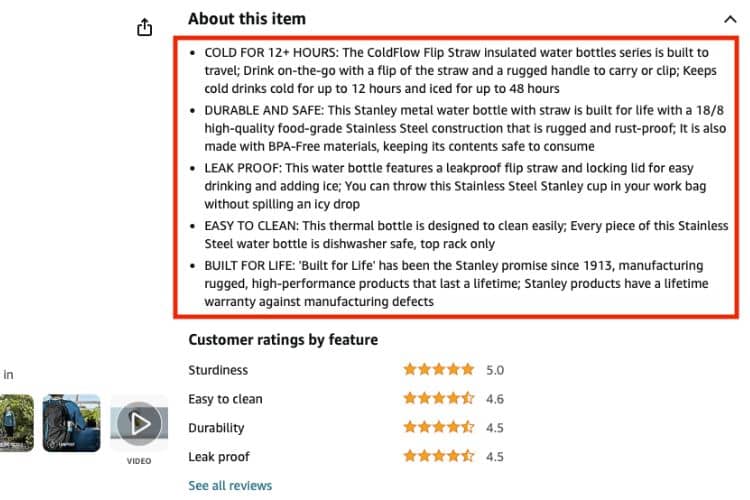
Bullet points: Located just below the title on the product listing and to the right of the images, bullet points are an essential part of Amazon product presentation. Up to five of these points can be included, and their main function is to highlight the product’s key features and benefits in a concise and appealing way.
Bullet points are fundamental for giving customers a quick understanding of what the product offers, significantly influencing the purchase decision.
Rating: Rating is a scoring system that allows Amazon customers to rate products using up to 5 stars. The rating provides a quick, visual assessment of customer satisfaction with the product. Each Amazon product listing shows an average rating, which represents the mean of all individual ratings received by the product.
The average is a key indicator for potential buyers, as it reflects the perceived quality and overall user experience with the product. A high rating can significantly influence the purchase decision, increasing trust and credibility for the product in the market.
Review: Product reviews are written evaluations that customers leave on Amazon after purchasing a product. Reviews include a rating from 1 to 5 stars, reflecting the customer’s level of satisfaction with the product. In addition, Amazon distinguishes between verified and unverified comments. A verified comment indicates that Amazon has confirmed the customer actually purchased the product on its platform, adding authenticity and credibility to the review. reseñas y opiniones sobre productos son evaluaciones escritas que los clientes dejan en Amazon tras comprar un producto. Las opiniones incluyen una calificación que va de 1 a 5 estrellas, reflejando el grado de satisfacción del cliente con el producto. Además, Amazon distingue entre comentarios verificados y no verificados. Un comentario verificado indica que Amazon ha confirmado que el cliente realmente compró el producto en su plataforma, lo que añade autenticidad y credibilidad a la reseña.
Product reviews are fundamental in the Amazon ecosystem, as they provide future buyers with valuable information about the quality, functionality, and performance of products, helping them make informed purchasing decisions.
ROI (Return on Investment): ROI is a key financial indicator that measures the profitability of an investment. It represents the percentage of profit or loss generated relative to the initial investment. It is calculated using the formula: ROI (%) = [(investment gain – investment cost) / investment cost] x 100.
It is a calculation that allows investors and entrepreneurs to assess the efficiency of their investments, compare different investment opportunities, and make informed decisions about where to allocate their resources to maximize profits.
Seller Central: Seller Central is the online interface provided by Amazon for its sellers. It functions as a comprehensive control panel that allows users to manage various aspects of their Amazon business. Through Seller Central, sellers can add new products to the platform, monitor and adjust inventory, launch and track advertising campaigns, interact with customers, and access a variety of tools and reports that help optimize sales.
The portal is essential for the efficient management of Amazon selling operations, offering key resources and data to maximize success in the marketplace.
Seller Feedback: Seller Feedback is a specific type of rating on Amazon that customers can assign to sellers they have transacted with. The rating ranges from 1 to 5 stars and reflects the customer’s overall experience with the seller, including aspects such as shipping speed, product description accuracy, and customer service quality.
Although Seller Feedback is different from product reviews, which focus on the quality and features of the product itself, it is still an important element. While it may have a smaller impact compared with product reviews, a positive seller rating can contribute to the seller’s trust and credibility on the platform, potentially influencing future customers’ purchase decisions.
Concepts related to numbers, labels, and barcodes
ASIN (Amazon Standard Identification Number): The ASIN, or Amazon Standard Identification Number, is a unique code made up of letters and numbers that Amazon assigns to each product when a new listing is created on its platform. The identifier is exclusive to each product within Amazon’s catalog and is essential for managing and tracking products on the site.
Each Amazon listing has its own ASIN, making it easier for users and Amazon’s system to find, reference, and catalog products accurately. The ASIN is particularly important for sellers and buyers because it allows quick and specific identification of products, and it is used in all operations and transactions related to the product on the Amazon platform.
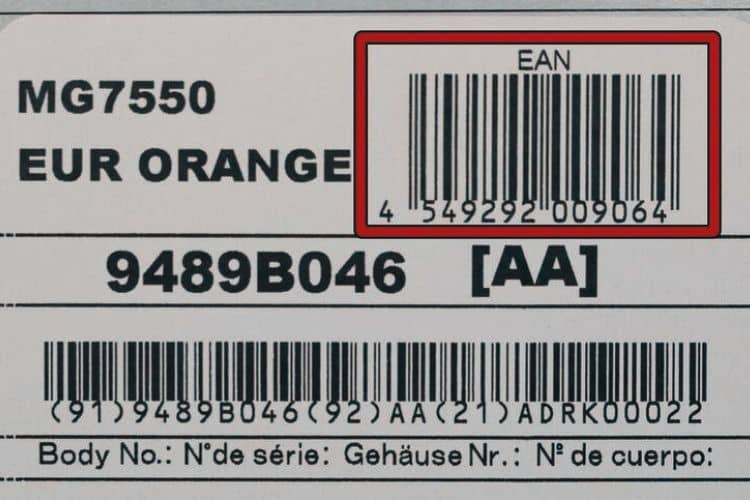
EAN (European Article Number) / GTIN (Global Trade Item Number): EAN, also known as European Article Number, and GTIN, or Global Trade Item Number, are barcode formats widely used in global commerce. Issued by the GS1 organization, these codes are essential for standard product identification in the international market.
EAN is a barcode used mainly in Europe, but it is recognized worldwide. It consists of a 13-digit numeric code that uniquely identifies a specific product and its manufacturer. GTIN is a broader term that covers several barcode formats, including EAN, and is used to uniquely identify items in the global supply chain.
These codes are fundamental for efficient inventory management and logistics in retail and e-commerce. On platforms like Amazon, EANs or GTINs allow sellers to list their products so they can be easily identified and tracked worldwide, thereby facilitating commercial transactions and inventory management across different markets and regions.
FNSKU (Fulfillment Network Stock Keeping Unit): The FNSKU is a unique barcode assigned by Amazon to products or product variants managed through its Fulfillment by Amazon (FBA) service. It is exclusive to each individual item within Amazon’s logistics system and is crucial for efficient inventory handling in its fulfillment centers.
For sellers using Amazon FBA, the FNSKU is the only barcode that should appear on each product’s packaging. It allows Amazon to identify and track each product accurately throughout the fulfillment process, from warehouse receipt to delivery to the end customer. Using the FNSKU ensures that the correct products are sent to customers and facilitates inventory and return management.
GS1: GS1 is a global nonprofit organization that sets standards for the unique identification of products and services through the issuance of barcodes such as UPC, EAN, and GTIN. It is fundamental in global trade for efficient inventory management, logistics, and supply chain traceability.
UPC (Universal Product Code): UPC, or Universal Product Code, is a standard barcode format widely used in retail worldwide. It is issued by GS1, an international organization that develops and maintains standards for the unique identification of products.
The UPC consists of 12 numeric digits and a corresponding barcode, which together uniquely identify a product and its manufacturer. The coding system is essential for efficient inventory management and sales processing in physical and online stores.
In the context of Amazon, sellers often require a UPC to list new products, as it provides a standardized and globally recognized way to identify items in the vast e-commerce marketplace.

Concepts for developing a private label on Amazon FBA
Amazon Brand Registry: Amazon Brand Registry is a program designed for brand owners to register their brands on Amazon. It offers additional benefits such as access to Enhanced Brand Content, tools to protect the brand, and improved product presentation on the platform. The program helps sellers create a richer customer experience and protect their intellectual property.
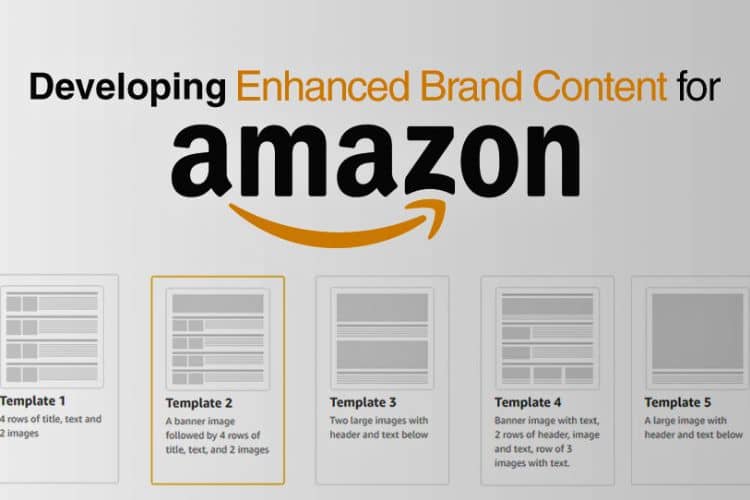
Enhanced Brand Content (EBC): Enhanced Brand Content, or EBC, is an Amazon feature that allows sellers to enrich their product pages (listings) with additional visual and descriptive elements. It includes the addition of higher-quality images, videos, and detailed image descriptions.
EBC helps improve the customer experience by providing a more attractive and complete product presentation, which can contribute to higher conversions and sales.
EUIPO (European Union Intellectual Property Office): EUIPO is a European Union agency specialized in the management and registration of trademarks, designs, and models at the European level. Its main function is to facilitate and protect intellectual property within EU member states, offering a unified system for trademark and design registration. EUIPO plays a crucial role in promoting innovation and fair competition in the European market.
USPTO (United States Patent and Trademark Office): USPTO is the U.S. government agency responsible for issuing and administering patents and trademarks. Its main function is to grant legal protection to inventors and companies for their creations and innovations, thereby fostering technological and economic development. USPTO also provides information and resources related to intellectual property.
WIPO:
WIPO, known in Spanish as OMPI, is a specialized agency of the United Nations responsible for promoting the protection of intellectual property worldwide. It manages international treaties, offers services for the registration and protection of intellectual property rights, sets policies, provides relevant information, and fosters cooperation among states on intellectual property matters. Its goal is to contribute to a balanced and accessible intellectual property system that encourages creativity and innovation globally.

Concepts related to logistics and transportation in the Amazon FBA model
Air Express: Air Express, which includes services from companies such as DHL, FEDEX, UPS, and TNT, is a fast and efficient air transport solution, ideal for small shipments with a total weight under 200 kg in import-export operations. This option is particularly convenient for those starting out in international trade with lower-volume products.
It offers fast delivery times, generally between 3 and 5 days, at an approximate cost of 5 to 8 dollars per kilogram, making it an attractive option for urgent or high-priority shipments.
Air Carrier or Air Cargo: Air Cargo, also known as air freight transport, is a more economical option for shipping small products with a total weight of up to 200 kg compared with Air Express services. Although it offers more attractive prices, generally between 3.5 and 5 dollars per kilogram, it involves more complex logistics.
Unlike express service, which is faster and more direct, Air Cargo requires more paperwork and may incur additional costs. Delivery time is slightly longer, ranging from 5 to 7 days. It is important to consider these additional factors, such as paperwork and extra expenses, when choosing this air transport method for importing and exporting products.
Custom Broker: A Custom Broker, or customs broker, is a professional or company specialized in handling customs procedures on behalf of its clients. This includes processing customs clearance for goods when they enter or leave a country. The customs broker ensures that all goods comply with applicable customs regulations and laws, thereby facilitating efficient and legal transit across borders.
Their services are essential to avoid delays, fines, or legal issues related to the import and export of goods, making them a key link in international trade and logistics.

Freight Forwarder: A Freight Forwarder is a person or company specialized in organizing and coordinating the transportation of goods for third parties. Their role is to act as an intermediary between the sender and the recipient, handling and facilitating the shipping process through different modes of transport (such as sea, air, rail, or road).
The main mission of a Freight Forwarder is to ensure a smooth and efficient transition of cargo, integrating the services of various carriers and managing all related administrative and logistical operations. This includes preparing the necessary shipping documentation, customs clearance, temporary storage, and arranging insurance, among other services.
Freight Forwarders are fundamental in international trade, as they simplify and optimize the supply chain for companies shipping goods globally.
FCL (Full Container Load): FCL, which stands for Full Container Load, refers to the sea transport option in which a container is used exclusively for a single shipment, carrying the cargo of one consignee only. This option is ideal for large cargo volumes, as it allows the full use of a standard ISO container’s space, thereby optimizing logistics and potentially reducing transport costs. FCL is a common choice for large shipments because it offers greater control over handling and cargo security during transport.
LCL (Less than Container Load): LCL, or Less than Container Load, is a sea transport option where cargo from multiple shippers is consolidated and transported in the same standard ISO container. This mode is ideal for smaller shipments that do not require a full container. By sharing container space with other shipments, transport costs are distributed among different consignees, making it a more economical option for smaller loads. LCL is an efficient solution for businesses that need to ship smaller quantities of goods without incurring the cost of a full container.

Sea freight: For shipping large-volume items, sea freight is the most commonly used option due to its operational efficiency in cost and its ability to handle large quantities. Users can choose between two main options: FCL (Full Container Load), which involves using a full container for a single shipment, and LCL (Less than Container Load), where the container is shared with cargo from other exporters.
Although sea freight is cheaper, generally less than 1 dollar per kilogram, and can handle larger loads, it has longer delivery times, ranging from 20 to 60 days. In addition, as with air freight, additional expenses and the specific restrictions of this type of transport must be considered.
Concepts related to import operations and customs
DDP (Delivered Duty Paid): DDP is an international trade term indicating that the seller delivers the goods to the buyer, cleared for import and ready to be unloaded at the agreed destination, but still on the transport vehicle.
Under this term, the seller assumes maximum responsibility, including all costs and risks associated with transporting the goods to the final destination, as well as payment of any import duties in the destination country. While EXW represents the seller’s minimum obligation, DDP represents the maximum.
EXW (Ex Works): EXW is an international trade term indicating that the seller has fulfilled their delivery obligation when they make the goods available to the buyer at their own premises (such as a factory, workshop, warehouse, etc.) without loading them onto a vehicle or completing export customs procedures.
Under this term, the buyer assumes all costs and risks from that point onward, including transport from the seller’s premises and any necessary customs process. EXW represents the minimum obligation for the seller.
FOB (Free on Board): FOB is an international trade term indicating that the seller is responsible for delivering the goods until they pass the ship’s rail at the agreed port of shipment. Once the goods are on board, the buyer assumes all costs and risks of loss or damage.
FOB also requires the seller to complete the necessary export procedures. It is used specifically for sea or river transport, although it is sometimes incorrectly used for other modes of transport.

HS Code: The HS Code, part of the Harmonized System of Nomenclature and Coding of Goods, is a standardized international nomenclature developed by the World Customs Organization. It is used to classify products in international trade.
Each product is identified by an HS code, which is recognized globally, thereby facilitating the import and export process by standardizing the description and classification of goods. It is essential for determining customs tariffs, trade regulations, and for collecting international trade statistics.
EORI Number (Economic Operator Registration and Identification): The EORI number is a unique identifier assigned to companies and economic operators engaged in import and export activities in the European Union. It is a number used for customs procedures and is required in all commercial transactions involving goods entering or leaving the European Union.
The EORI number facilitates the tracking and regulation of commercial activities, ensuring a more efficient and transparent customs process. It is an essential requirement for companies operating in international trade with the EU.
TARIC (Integrated Tariff of the European Communities): TARIC is a multilingual database that provides a detailed coding system for regulatory measures related to trade in the European Union. It defines customs duty rates and includes the community regulations applicable to different products. TARIC facilitates trade within and outside the EU by providing clear and accessible information on tariffs, restrictions, and trade regulations.
VAT (Value Added Tax): VAT on Amazon FBA is an indirect tax applied to the value added to goods and services. It is included in sales prices and paid by the final consumer. In international trade, most imports are also subject to VAT, affecting the total cost of imported goods. es un impuesto indirecto aplicado al valor añadido en bienes y servicios. Se incluye en los precios de venta y lo paga el consumidor final. En el comercio internacional, la mayoría de las importaciones también están sujetas a IVA, afectando el costo total de los bienes importados.

Concepts linked to the relationship between suppliers and brands
Alibaba: Alibaba.com, part of the Alibaba Group, is one of the largest and most recognized e-commerce platforms in the world, focused mainly on business-to-business (B2B) trade. Founded by Jack Ma, who became one of the richest men in the world, Alibaba.com facilitates international trade by connecting suppliers, mainly from Asia, with buyers around the world. The platform is known for its wide range of products suitable for Amazon FBA and for being a key resource for sourcing suppliers and products for businesses and entrepreneurs.
Alibaba Trade Assurance: Alibaba Trade Assurance is a free service offered on the Alibaba.com platform that protects both buyers and sellers in commercial transactions. The service ensures that payments made by buyers are held until they confirm receipt and satisfaction with the delivered products. Trade Assurance helps minimize the risks associated with online purchases, especially in international transactions, by providing an additional layer of security and confidence in the buying and selling process.
1688: 1688.com, also part of the Alibaba Group, is an e-commerce platform similar to Alibaba.com, but primarily oriented toward the Chinese domestic market. It functions as a B2B portal where Chinese businesses can buy and sell a wide variety of wholesale products. Although it is less known internationally than Alibaba.com, 1688.com is an important tool for companies looking for suppliers or products within China.
MOQ (Minimum Order Quantity): MOQ is the minimum number of units a supplier requires in an order. It is a very common term in manufacturing and wholesale supply, and it sets the lowest number of products a customer must buy in a single transaction. MOQ helps suppliers maintain efficiency and profitability in production.
ODM (Original Design Manufacturer): An ODM is a company that designs and manufactures products that are then marketed by other companies under their own brand. These manufacturers not only produce items, but also offer design and engineering services, helping turn a product concept into reality.
In addition, ODMs may have a catalog of generic or white-label products that clients can customize and sell under their own brand. This is a common model in sectors such as electronics, where it allows companies to market innovative products without investing in manufacturing infrastructure and product development.
OEM (Original Equipment Manufacturer): An OEM is a company that manufactures components or products that are used in the final products of another company, known as the assembler or integrator. In this model, the OEM focuses on production according to the client’s specifications and requirements, but generally does not participate in the conceptual design of the product.
OEM products are essential in many industries, such as automotive and electronics, where final assemblers rely on these specialized manufacturers for key components of their products.

Samples: Samples are small quantities of a product provided by a supplier so that the customer can evaluate its quality before placing a larger order. They are an essential tool in the sourcing process, as they allow the quality, design, and functionality of the product to be verified, ensuring that it meets expectations and requirements before committing to a bulk order. Samples help prevent misunderstandings and ensure customer satisfaction with the final product.
Sourcing: Sourcing is the process of searching for, locating, and evaluating suppliers to acquire products or services. It involves detailed research to find options that offer the best value for money efficiently. The goal is to identify suppliers that can meet specific needs in terms of quality, cost, and delivery time.
Taobao: Taobao.com, another Alibaba Group platform, is a very popular e-commerce site in China, comparable in some respects to Amazon. It focuses mainly on the consumer market (B2C and C2C), offering a wide variety of products, from clothing and electronics to home goods and entertainment items. Taobao is known for its large user base and for being an online marketplace where consumers can find almost anything they are looking for at competitive prices.
Specific concepts about advertising on Amazon
ACoS (Advertising Cost of Sales): ACoS is a metric used in digital advertising, especially on platforms like Amazon, to measure the efficiency of an advertising campaign. It is calculated as the percentage of revenue generated from sales that has been spent on advertising. It allows advertisers to evaluate the profitability of advertising campaigns, helping them understand what proportion of their sales revenue is allocated to ad spend.
CPC (Cost Per Click): CPC is a metric that indicates the cost associated with each click a user makes on an ad. It is expressed in a specific currency (such as EUR, USD, etc.) and is a key factor in pay-per-click (PPC) advertising. CPC helps advertisers understand how much they are paying, on average, for each visitor they attract to their website or product page through ads. It is a fundamental term for managing and optimizing budgets in digital advertising campaigns.
CTR (Click Through Rate): CTR is a metric that measures the effectiveness of an online advertising campaign by calculating the percentage of clicks an ad receives relative to the number of times it is shown (impressions). It is used to assess how attractive or relevant an ad is to the target audience, making it a key indicator in digital marketing strategies.

Lightning Deals: Lightning Deals are limited-time promotional offers available on platforms like Amazon. Sellers can choose both the discount amount and the duration of the offer, which is usually a few hours to one day.
The offers are designed to encourage quick purchases by providing reduced prices for a short period, creating a sense of urgency among buyers. Lightning Deals are an effective tool for increasing product visibility and driving rapid sales.
PPC (Pay Per Click): PPC is an online advertising model used by Amazon, where sellers pay a fee each time a user clicks on one of their ads. It allows sellers to promote their products more effectively, since they only pay for actual traffic directed to their product listings. PPC is a key tool for increasing visibility and sales on Amazon.
Negative keywords: Negative keywords are specific terms used in digital advertising, especially in paid search campaigns, to prevent ads from appearing in search results that include those words. By using negative keywords, advertisers can ensure their ads are not shown in irrelevant or unwanted searches, thereby improving the relevance and efficiency of their advertising campaigns. It is an approach that helps drive higher-quality traffic to the product listing and optimize ad spend.
Search Volume: Search volume refers to the number of times a specific keyword is searched in a search engine during a given month. It is one of the most crucial indicators in SEO (Search Engine Optimization) and digital marketing, as it helps understand the popularity and demand for certain terms or topics.
High search volume indicates strong user interest, which can be useful for planning content and advertising strategies.

Targeting: Targeting, in the context of advertising and marketing, refers to the practice of directing ads or advertising campaigns toward a specific audience in a precise way. It involves identifying and segmenting consumers who are most likely to be interested in a product or service, based on factors such as demographics, interests, buying behavior, and other relevant criteria.
The goal of targeting is to increase advertising effectiveness by ensuring that messages reach the right people, thereby maximizing return on ad spend.
Some marketing-related terms
Product insert: A product insert is a marketing tactic that consists of placing a small promotional material, such as a business-card-sized card, inside a product’s packaging. The material can serve various purposes, such as encouraging customers to leave a product review, offering a discount on future purchases, providing additional information about other products or services, or simply thanking the customer for their purchase. The strategy helps improve the customer experience and can encourage brand loyalty and engagement.
Long Tail Keyword: Long-tail keywords are longer, more specific phrases that users typically use in their internet searches. Unlike shorter, more generic keywords, long-tail keywords usually have lower search volume, but they attract a more specific audience and often have a higher conversion rate.
They are especially useful in SEO and content marketing strategies, as they make it possible to target niche markets and users with very specific search intent.
Affiliate marketing: Affiliate marketing is a digital marketing strategy in which companies collaborate with external individuals or entities, known as affiliates, to promote their products or services. Affiliates use unique affiliate links to drive traffic to the companies’ websites.
In return, they receive a commission based on the sales, visits, or leads generated through these links. This technique benefits both companies, which gain greater reach and sales, and affiliates, who can monetize their audience or content.

UPSELL:
Upsell is a sales strategy in which customers are encouraged to buy additional or higher-value products or services compared with what they originally planned to purchase. The goal is to increase the value of the sale by offering upgrades, accessories, additional services, or other complementary products.
It is a technique that not only increases revenue, but can also improve the customer experience by offering options that may better satisfy their needs or desires.
Niche website: A niche website is a highly specialized website focused on a specific and detailed topic or market niche. They usually take the form of blogs or informational websites and are designed to attract a particular audience interested in that specific topic.
Niche websites are valuable for their ability to generate relevant and detailed content that addresses the specific needs and interests of their target audience, often resulting in high engagement and user loyalty.
They are effective tools for establishing authority in a particular area and can be monetized through advertising, affiliate marketing, the sale of specialized products, among others.

Tools for product valuation, analytics, and more on Amazon
Feedback Genius: Feedback Genius is an auto-responder tool designed for Amazon FBA sellers, offering advanced features for managing customer communications. It allows automated post-purchase emails, which are essential for encouraging customer interaction, such as requesting reviews and feedback.
Its effective use can lead to a significant increase in the number of product reviews, which is crucial for reputation and sales success on Amazon. It helps sellers maintain consistent and effective communication with their customers, improving the customer experience and boosting the visibility and credibility of their products.
Helium 10: Helium 10 is a widely recognized tool in Amazon e-commerce, especially valued for its keyword research capabilities. Although the user prefers Jungle Scout for niche research, they acknowledge that Helium 10 stands out for the accuracy of its keyword analysis, since its data is obtained directly from Amazon.
It offers a variety of features, including listing optimization, product tracking, competitor analysis, and inventory management, making it a robust option for sellers looking to improve their visibility and efficiency on Amazon. Helium 10 is a preferred choice for those seeking detailed and accurate keyword research to optimize their SEO and advertising strategies on Amazon.

Jungle Scout: Jungle Scout is a tool for Amazon FBA sellers designed to facilitate the search for and analysis of profitable products on the Amazon platform. It offers a web app and a Chrome extension that allow users to easily explore and evaluate market opportunities, analyze sales trends, estimate revenue, and monitor the competition.
Jungle Scout is valued for its ability to simplify and streamline the product selection process, making it a key tool for success in Amazon e-commerce.
ShopKeeper: ShopKeeper is an advanced tool for Amazon sellers, designed to provide a comprehensive, real-time view of the profitability of their businesses across different marketplaces. The application offers features that go beyond those provided by Seller Central, including detailed tracking of revenue, costs, and profits.
Its ability to consolidate and analyze financial and sales data on a single platform makes it indispensable for effective and serious management of an Amazon business. ShopKeeper is valued for its ease of use and for providing crucial information that helps sellers make informed decisions and optimize and scale the online business.
VatGlobal: VatGlobal is a company specialized in VAT-related services, including fiscal representation, compliance, and tax management, particularly useful for businesses operating across multiple jurisdictions such as Amazon FBA businesses. The user’s recommendation highlights its effectiveness and reliability in VAT management, a crucial aspect for the success and legality of international businesses.
VatGlobal’s ability to handle tax complexities and ensure regulatory compliance in different countries makes it a recommended option for Amazon sellers looking to outsource and simplify their business VAT management.

Conclusion
As we delve into the prolific and expansive world of Amazon FBA, we are faced with a landscape full of opportunities and challenges. At first glance, the complexity of this environment may seem overwhelming, a labyrinth of strategies and practices that require attention and understanding. However, by going deeper into its essence, we discover that this complexity is, in fact, manageable and accessible.
The key to successfully navigating Amazon FBA lies in the ability to break down and understand each element that makes up its structure. Just like a watchmaker who understands every gear in their creation, an Amazon seller must become familiar with the mechanisms that drive their business. Understanding not only makes day-to-day management easier, but also opens the door to innovation and adaptation in a constantly evolving market.
Mastering Amazon FBA is not an overnight goal. It requires time, patience, and above all, a continuous learning mindset. But the effort invested in this process is invaluable. By mastering the inner workings of this ecosystem, sellers equip themselves with the tools needed to make informed decisions, develop effective strategies, and ultimately stand out in a highly competitive space.
In short, although the Amazon FBA universe may seem intimidating at first, with dedication and the right approach, its complexity becomes a strategic advantage. It is a journey of discovery and mastery that not only simplifies business management, but also drives growth and sustainable success with a view to expanding your online business in the European Union.